Healthy-soil assessment starts by looking at the site as a whole. Slope, drainage, shade, recent weather, crop history and surface cover all affect what appears in a handful of soil.
Colour can offer clues, but it is not a verdict. Darker soil may contain more organic matter, while red and brown colours often reflect iron compounds and local geology. Laboratory analysis is needed before making nutrient or amendment decisions.
Gently break a moist sample apart. Stable crumbs and visible pores can support movement of air and water. Hard layers, severe crusting, prolonged waterlogging or powdery collapse deserve closer investigation.
Roots and small soil organisms are useful signs of biological activity. FAO describes healthy soil through its continuing ability to function as a living system and to support productivity, water and air quality, and plant and animal health.
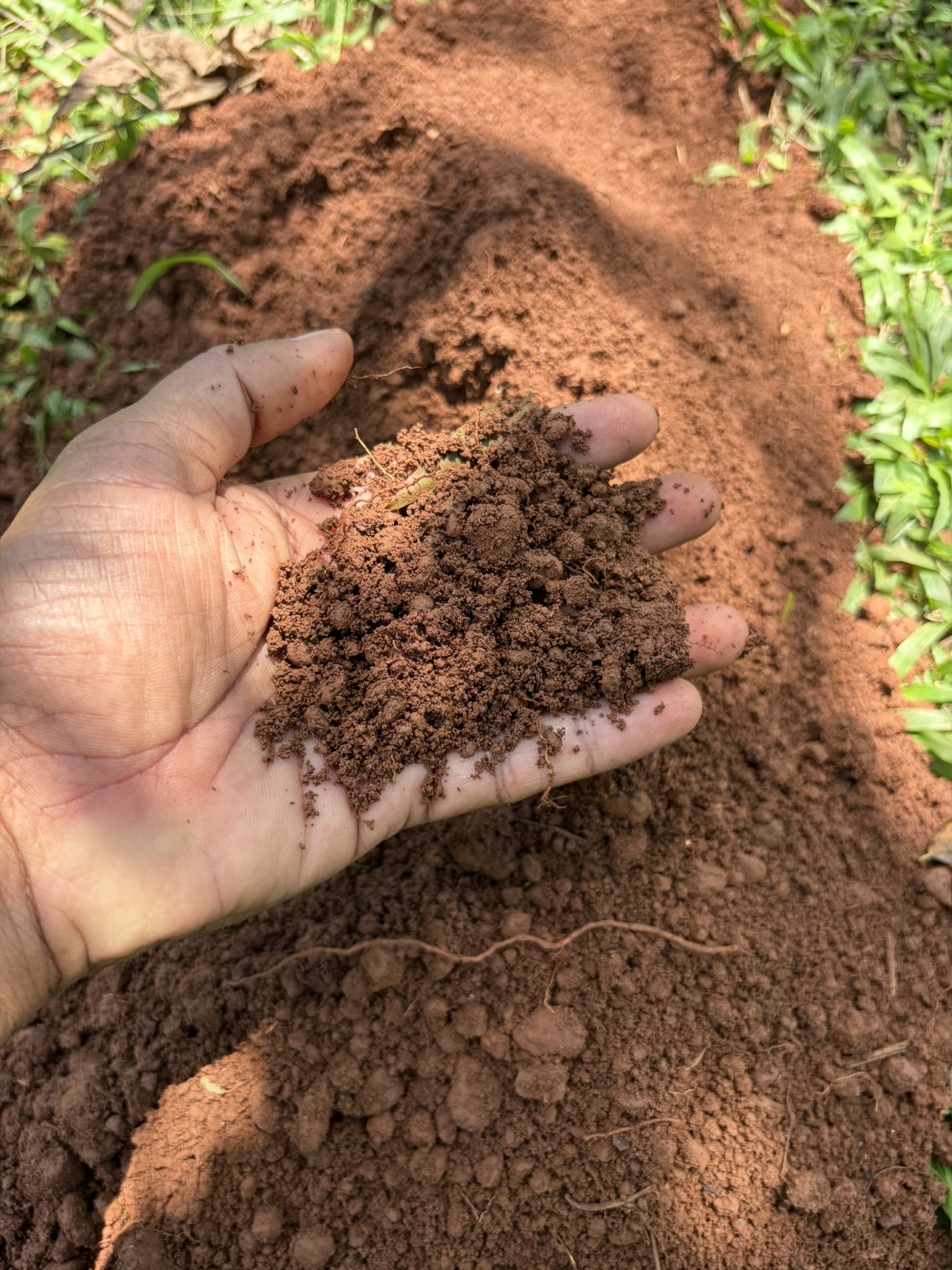
The supplied Matale estate photograph shows a friable reddish-brown sample. K1 records this only as a field observation. It is not a soil classification, nutrient result or certification claim. Future estate records should connect sampling location, date, recent weather and laboratory results before technical conclusions are published.
Sources and further reading
FAO - What is a healthy soil? ↗FAO Global Soil Partnership - Soil organic carbon ↗Use the K1 Origins contact form to submit an evidence-based correction.