
K1 Trace & Taste
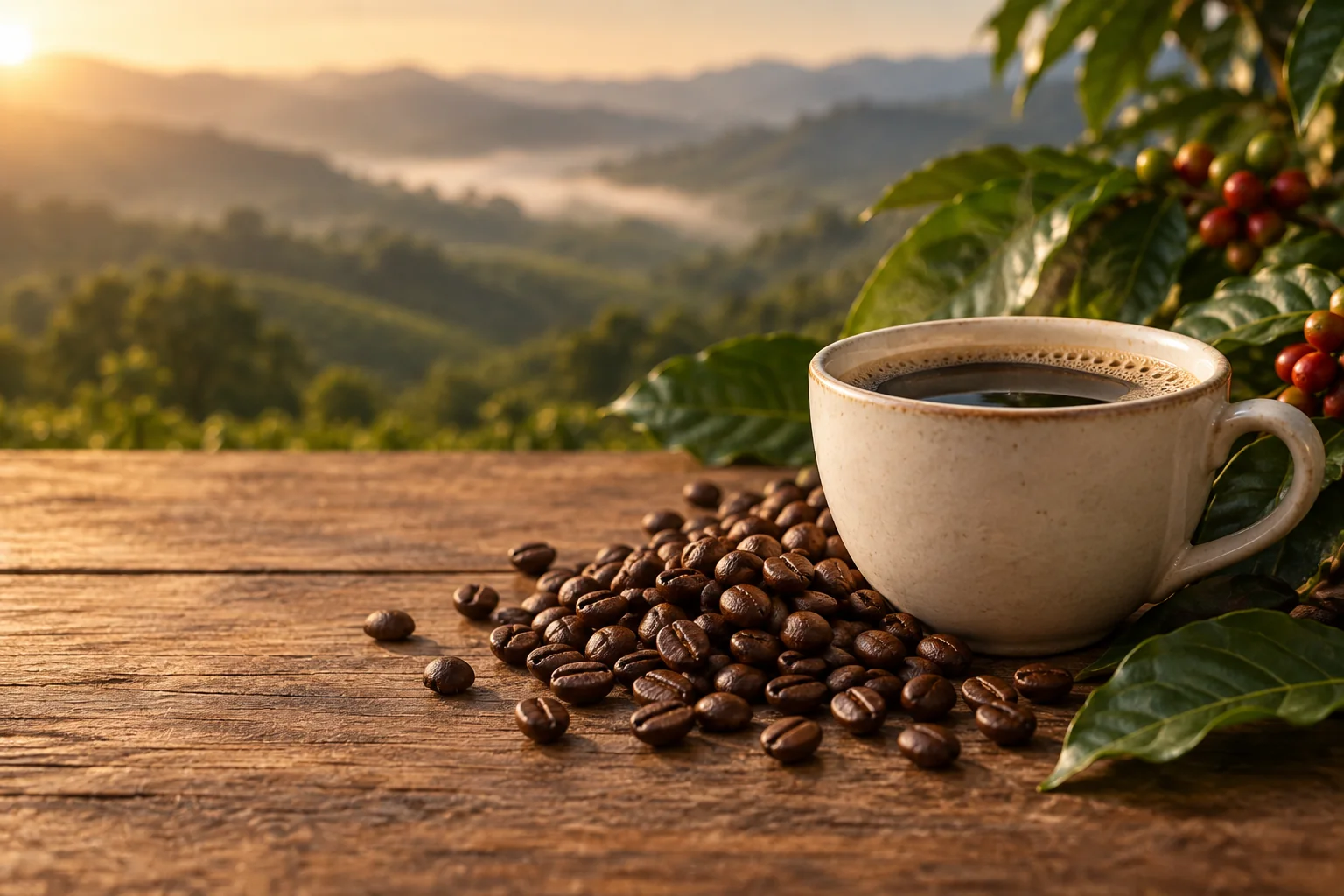
Brazilian Coffee
A silky, full-bodied natural-process coffee from Minas Gerais, with dark chocolate, roasted hazelnuts and brown sugar. Suits espresso or filter, black or with milk.
Explore Brazilian Coffee ↓Minas Gerais, Brazil
01 · Origin & Trace
Brazilian Coffee — origin and trace
Minas Gerais is a highland coffee-growing region in Brazil, with dry, sunny days and cool nights. This natural-process coffee has a silky, full body, dark chocolate, roasted hazelnuts and brown sugar, rounded out by subtle dried berry sweetness.
Your product record
This is where it came from.
Explore the product origin and specification here. Batch and roast-date records remain specific to each pack.
02 · From Origin to Table
A journey of care,
from source to finished product.
01
Grow
Follow the coffee to its origin.
02
Harvest
Ripe coffee cherries are collected.
03
Process
Natural
04
Dry
Moisture is reduced before storage and milling.
05
Green bean
Coffee is milled, sorted and prepared for export.
06
Roast
Roasting develops aroma and the selected expression.
07
Cup
Dark chocolate, roasted hazelnuts and brown sugar, with subtle dried berry sweetness.
03 · Taste & Use
Enjoy it with its
character in view.
Taste and aroma
Dark chocolate, roasted hazelnuts and brown sugar, with subtle dried berry sweetness.
Prepare
Suitable for espresso or filter. The espresso profile is balanced, chocolatey and low in acidity, enjoyed as a straight shot or with milk.
Enjoy
Suitable for espresso or filter. The espresso profile is balanced, chocolatey and low in acidity, enjoyed as a straight shot or with milk.
04 · Common Questions
Quick answers for
everyday use.
Where does Brazilian Coffee come from?
Minas Gerais, Brazil.
What does Brazilian Coffee taste like?
Dark chocolate, roasted hazelnuts and brown sugar, with subtle dried berry sweetness.
How can I enjoy this coffee?
Suitable for espresso or filter. The espresso profile is balanced, chocolatey and low in acidity, enjoyed as a straight shot or with milk.
What do tasting notes mean?
Tasting notes describe sensory impressions, rather than added ingredients.
Why can the same origin taste different?
Variety, site, season, ripeness, processing, roast, freshness and brewing can all change the cup.
Where is K1 coffee roasted?
The initial specification states Australia. The specific roast date belongs to the product record.
How should coffee be stored?
Keep it sealed, cool, dry and away from strong odours and direct light.
Continue discovering