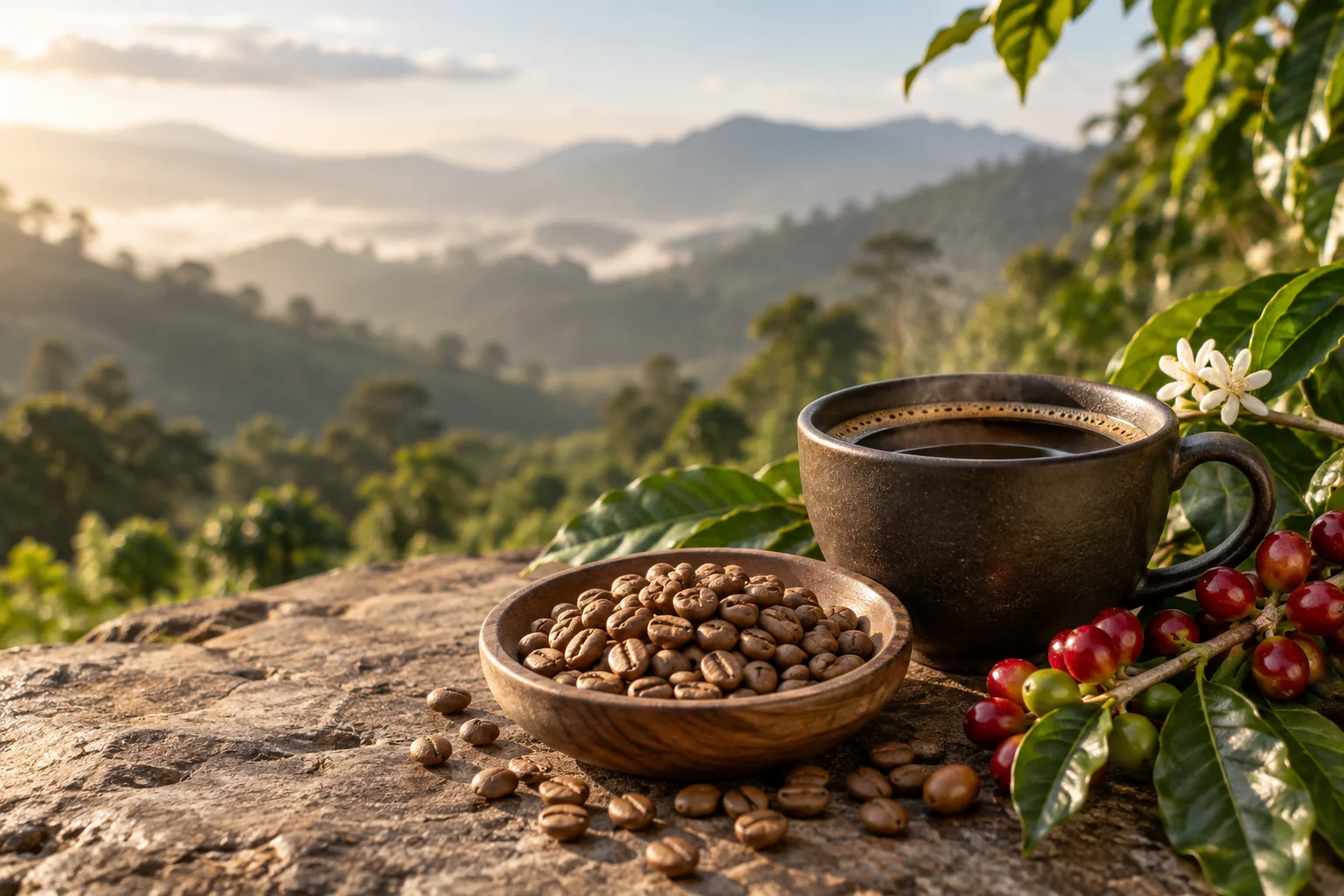
A silky, full-bodied natural-process coffee from Minas Gerais, with dark chocolate, roasted hazelnuts and brown sugar. Suits espresso or filter, black or with milk.
A rich natural-process coffee from the Guji zone of southern Ethiopia, with crème brûlée, nut butter, blackcurrant, dried stonefruit and floral notes. Suits espresso or filter.
Single origin coffee comes from one identified source, which may be a country, region, producer group or farm. The term alone does not mean a single estate. Look for the specific origin information provided for the coffee.
How is single origin coffee different from a blend?
A single origin highlights an identified source; a blend combines selected coffees into a chosen cup profile. Your preference may depend on flavour and how you drink coffee. Compare the stated origin, roast and tasting information rather than choosing on the category alone.
Where do K1 coffees come from?
Our collection includes Brazilian coffee, Ethiopian coffee from the Guji zone of southern Ethiopia, Ceylon coffee from Sri Lanka, and K1 Special Blend. Our Ceylon coffee is roasted in Australia. Explore each Trace & Taste guide for origin details and check the pack for batch information.
Tasting notes describe the aromas and flavours perceived in brewed coffee. Chocolate, fruit or nut descriptions are sensory comparisons, not an ingredient list. Use them as a guide to the cup, and consult the product ingredients separately.
Which K1 coffee could suit milk drinks?
Our Brazilian coffee has a chocolate-and-hazelnut profile, while K1 Special Blend offers caramel and milk-chocolate notes. Both can be enjoyed with milk. Start with the flavours you enjoy and adjust your preparation to suit.
Close the pack securely between uses and store it away from heat, moisture, sunlight and strong smells. Follow any additional storage instructions supplied with your coffee.